Welder Training Courses in Bangalore — TIG, MIG (GMAW), Arc (SMAW) & FCAW
Trinity NDT WeldSolutions runs welder training courses in Bangalore for four arc welding processes — SMAW (arc/stick), GTAW (TIG), GMAW (MIG/MAG/CO₂) and FCAW. Every programme is 60–80% hands-on, designed around the welder's job, material, thickness and welding position, and delivered at our Centre of Excellence in Welding, Peenya Industrial Area. Trainee welds can be inspected in our own NABL-accredited NDT laboratory, and welders can be qualified to ISO 9606-1, ASME Section IX and other international codes.
Reviewed by Ravi Kumar Thammana, CEO & Co-Founder — ASNT NDT Level III, International Welding Engineer (IWE), NAS410 Level III and ISO 9712 Level III – 6 methods. Last updated: 19 September 2026.

What We Provide to Our Customers? Take a look at Our Complete Weld Solutions
Welding Division of ‘Trinity NDT WeldSolutions Private Limited’ at Bangalore, India provide comprehensive training courses on Welding, Brazing and Soldering. Starting from training to establishing WPS, BPS, inspection and testing of welds, we are India’s complete welding services company.
Our Services include, Calibration of welding machines, training of welders on SMAW, GMAW, GTAW, FCAW, certification of welders. Consulting – ISO3834, EN15085, EN1090 certifications. External International Welding Engineer(IWE) services for these company certifications as ‘Responsible Welding Coordinator (RWC)’.
A world class company located at Bangalore, renowned for NDT testing services, Welding services, advanced NDT and training services. Seasoned experts to take emerging challenges. Since over two decades, providing effective solutions to over 1500+ clients across India.
Do you need professional training welding, brazing? contact us today for a cost effective solution from Trinity NDT.
Welder, Brazer Qualification and Certification Service
A welding procedure is a systematic method that is used to repeatedly produce sound quality weld joints. Various national and international fabrication codes, standards and specifications are currently being followed to prepare welding procedure specifications (WPS) to qualify the fabrications welding procedures. The procedure qualification record PQR is a document that consists of record of test results on the welded coupon.
Trinity NDT has over two decades of serving the customers through certification of their welders to International standards, codes and specifications. Our team on Welder Qualification tests, Welding Inspection and welding consulting services comprises of Welding experts with decades of welding related experience with leading welding and fabrication companies. Our welding inspectors are certified to American Welding Society AWS-Certified Welding Inspectors, CSWIP 3.1 and other internationally recognized personnel certifications. The panel of experts at Trinity NDT can work together with clients and their counterparts for specific requirements to establish Welder Qualification tests.
Our Welder Training Courses in Bangalore at a Glance
Choose the process that matches the job you are targeting. All four courses can be customised for plate or pipe, and for the material and thickness you weld.
| Course | Process (ISO 4063) | Best for | Positions & joints | Qualification option |
|---|---|---|---|---|
| SMAW / Arc / Stick welding | 111 | Fabrication shops, structural work, maintenance and site welders | Plate 1G–4G, fillets 1F–4F, pipe 5G/6G | ISO 9606-1, ASME IX, AWS D1.1 |
| GTAW / TIG welding | 141 | Pressure vessels, boilers, process piping, aerospace, stainless steel, root passes | Plate and pipe, 1G–6G | ISO 9606-1, ASME IX, AWS D17.1 (aerospace) |
| GMAW / MIG–MAG (CO₂) welding | 131 / 135 | High-productivity fabrication, semi-automatic and robotic-cell operators | Butt and fillet joints, plate and pipe, all positions | ISO 9606-1, ASME IX, AWS D1.1 |
| FCAW / Flux-cored welding | 136 / 114 | Structural steel, heavy fabrication, shipbuilding, outdoor work | Butt and fillet joints, plate and pipe | ISO 9606-1, ASME IX, AWS D1.1 |
Not sure which process you need? WhatsApp your request now — we will match the course to your job profile.
Why Train at Trinity NDT's Centre of Excellence in Welding, Bangalore?
Industry 4.0-ready Fronius machines
Practise on modern welding machines from Fronius, Austria, that help you build the correct arc characteristics faster.
60–80% practical training
Most of your time is spent welding, with the rest devoted to classroom theory, safety and weld-defect analysis.
Job-specific programmes
We design the course around your product, material, thickness range and welding position, instead of one generic syllabus for everyone.
Your welds, proven by NDT
Trainee welds can be radiographed (X-ray/gamma), ultrasonically tested and inspected by MPI, DPT and visual methods in Trinity NDT's own NABL-accredited laboratory.
Qualification to international codes
After training, welders can be qualified and certified to ISO 9606-1, ASME Section IX, AWS D1.1, AWS D17.1 and other codes accepted by employers.
Trainers with industry depth
Our welding team includes International Welding Engineers (IWE), CSWIP 3.0/3.1 and AWS-certified inspectors with decades of fabrication and inspection experience.
Welder Training Courses
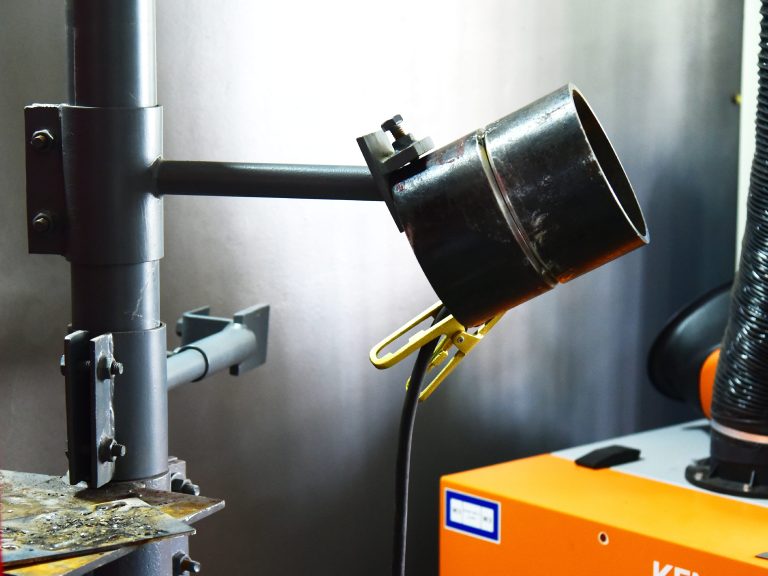
India is becoming manufacturing hub that has huge requirement for skilled welders. Since a decade, growth of fabrication industry is exponential. This is leading to large gap of supply and demand for skilled welders. Currently Government of India operates Industrial Training Institutes(ITIs) and and other skill institutes offer basic welder training.
Trinity NDT WeldSolutions has initiated training courses for welders at Bangalore. The courses offered for 4 welding processes, namely
- Shielded Metal Arc Welding (SMAW)
- Gas Metal Arc Welding(GMAW)
- Gas Tunsten Arc Welding(GTAW) and
- Flux Cored Arc Welding(FCAW)
If you want professional training on any of the above welding processes contact us today.
How Our Welder Training Courses are Special?
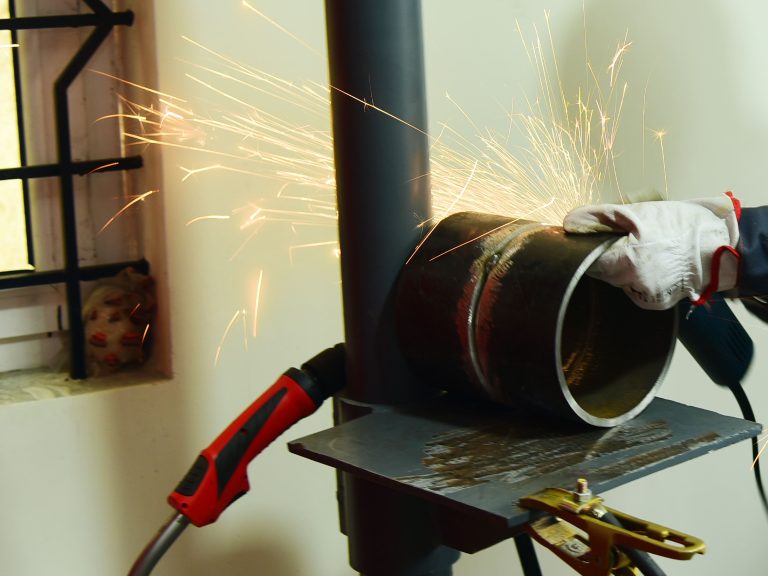
Welding is a process of joining materials. It is not just joining the materials the process must be carried out using correct variables skillful welder and ambience suitable for producing sound quality welding. Quite good number of welders in India are self made. It means the welders are becoming skillful by getting themselves strained while performing their job. Very less number of institutes offered welders training that makes them proficient about welding. These courses are generic in nature and one training may not be suitable for all. Because each programme needs to be designed considering the actual requirements for the job. General welder training courses lack infrastructure, professional trainers and no do not have job specific training.
Understanding the needs of the employers Trinity NDT WeldSolutions Private Limited – Welding training institute Office world class training on all major welding processes. Our expert to design these courses considering the actual requirement of the welder the job profile thickness range material and other factors that are relevant for welding.
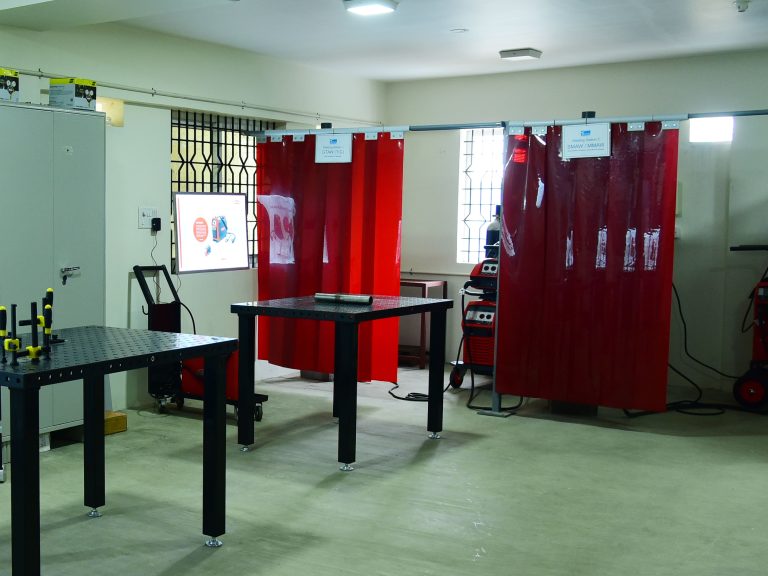
Industry 4.0 ready welding machines, state of art ‘Centre of excellence in welding’ located at core of Peenya industrial area in Bangalore India. Expert trainers with over two decades of experience in training are engaged. Each training module is designed to be practically intensive and covers at least 60% to 80% practicals and remaining classroom instruction. That is why we recommend before joining our welders training courses, the candidate should acquire at least 3 months of on-job experience. This helps To understand the concepts easily. That is why our courses makes the candidate ready to perform directly on projects.
Visit ‘Centre of Excellence in Welding’ at Bangalore today. Indicate your requirement. We design, organize a special welder training course for you.
SMAW Arc Welder Training
Shielded metal arc welding (SMAW), commonly called arc welding or stick welding, uses a flux-coated consumable electrode. The burning flux shields the molten weld pool from oxidation, so no shielding gas is needed. It remains the most widely used process in fabrication shops, structural work and site maintenance because the equipment is affordable and portable.
What you will learn in our SMAW arc welder training
- Machine set-up, polarity, current selection and safe arc striking
- Electrode selection and handling, including baking and storage of low-hydrogen electrodes (for example E7018) and general-purpose types such as E6013
- Bead control, butt and fillet welds on plate in flat, horizontal, vertical and overhead positions (1G–4G, 1F–4F)
- Pipe welding practice in fixed positions (5G/6G) — for the trainees whose work requires it
- Joint preparation, fit-up, root gap, interpass cleaning and distortion control
- Visual inspection, common weld defects (slag inclusion, undercut, porosity, lack of fusion) and how to correct them
- Weld quality verification by radiography, so you can see how your weld performs
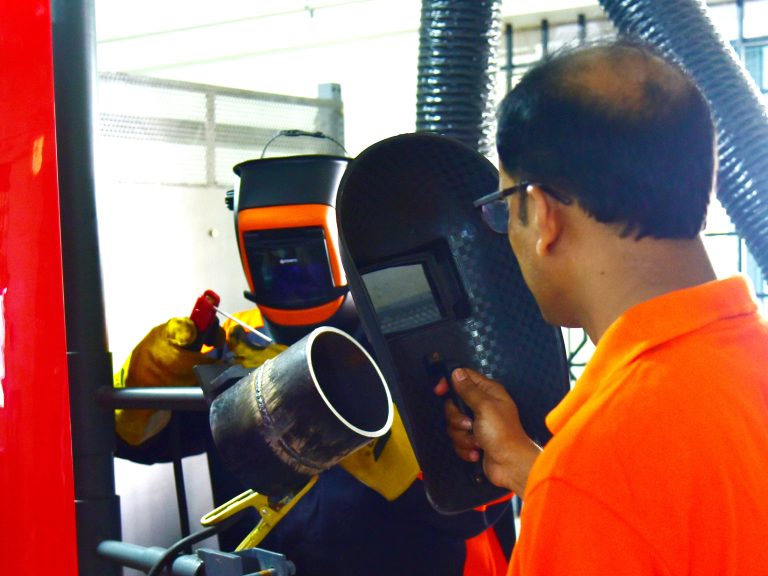
Who should join? Fabrication and maintenance welders, structural welders, pipe-fitters moving into welding, and employers who want their welders to produce X-ray-quality SMAW welds consistently.
We offer everything from portable to large power sources, so each candidate trains on the equipment matching their job. Enquire about SMAW arc welding training or call our our welding expert on +919844129439.
TIG (GTAW) Welding Training in Bangalore
Gas tungsten arc welding (GTAW), also called TIG welding, uses a non-consumable tungsten electrode and an inert shielding gas — usually argon, sometimes argon-helium. It gives the cleanest, most controlled welds and is the process of choice for critical work: pressure vessels, boilers, process piping, aerospace components and stainless steel. TIG demands high manual skill, and skilled TIG welders are in consistent demand.
What you will learn in our TIG welding course
- Machine and torch set-up, tungsten selection and preparation, gas flow and DC/AC settings
- Coordination of torch and filler rod hand movements
- Autogenous runs and welds with filler on plate in all positions
- Root-pass technique on pipe, including back-purging for stainless steel
- Butt, fillet and pipe joints on carbon steel and stainless steel, and other materials as your job needs
- Heat-input and distortion control on thin sections
- Inspection of TIG welds by visual and NDT methods — including radiography for root quality
Each TIG programme is tailored to the welder’s background, material, position and product form. If you want to certify after training, we can qualify you to ISO 9606-1 or ASME Section IX. Book TIG welding training in Bangalore
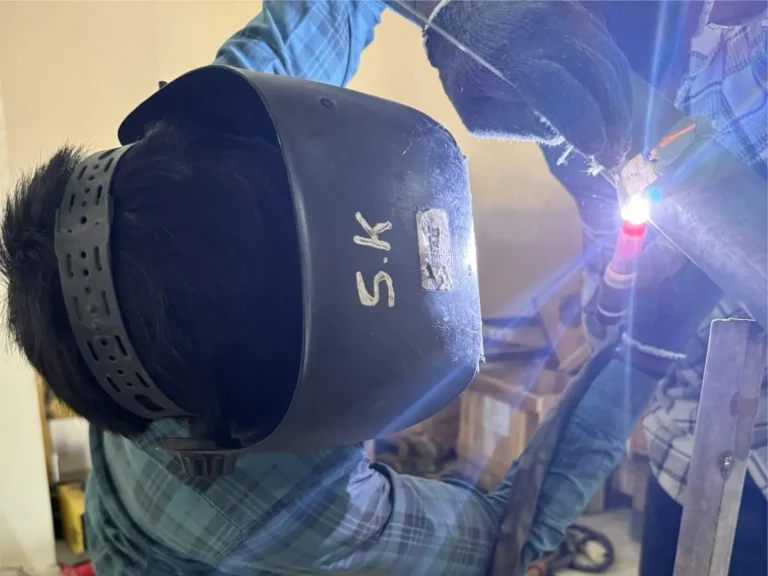
Who should join? Welders moving from SMAW into TIG, pipe welders for refinery, power, pharma and food-process piping, aerospace and precision fabrication welders, and companies upgrading their welders' skills.
GMAW (MIG / MAG / CO₂) Welding Training in Bangalore
Gas metal arc welding (GMAW) feeds a continuous consumable wire through the torch while a shielding gas protects the weld. When the gas is inert (argon or argon-helium) the process is called MIG; when it is active (CO₂ or an argon-CO₂ mixture) it is called MAG — pure CO₂ welding is the version most people in India call “CO₂ welding”. GMAW is the workhorse for semi-automatic, mechanised and robotic welding because of its high deposition rate and speed.
What you will learn in our GMAW / MIG–MAG welder training
- Setting current/voltage, wire-feed speed, stick-out, torch angle, travel speed and gas flow rate
- Metal transfer modes — short-circuit, spray and pulse — and when to use each
- Gas selection: CO₂ and argon-CO₂ mixtures for steels; argon for non-ferrous work
- Butt and fillet joints on plate and pipe in various positions
- Troubleshooting porosity, spatter, burn-through and lack of fusion
- Safe handling of gas cylinders, regulators and consumables
The centre has the complete range of equipment, safety accessories, consumables and gas combinations required. Enquire about MIG / GMAW welding training in Bangalore
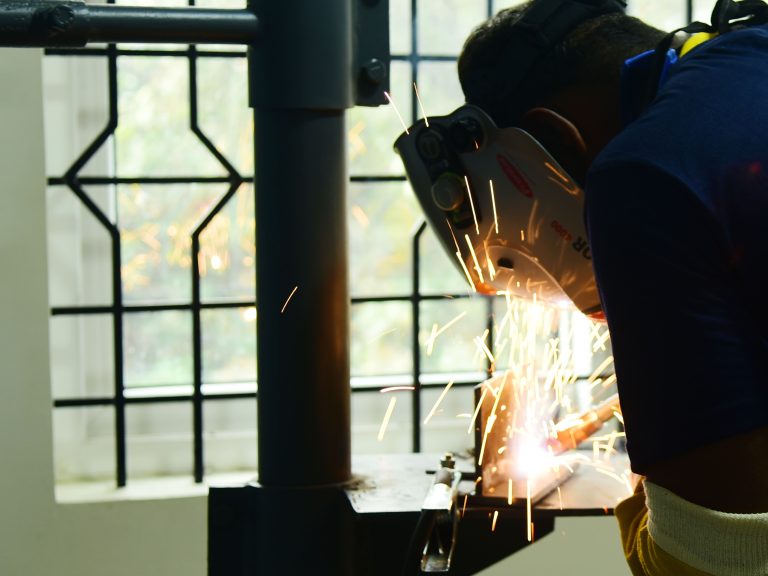
Who should join Fabrication welders, automotive and sheet-metal welders, semi-automatic welding operators, and welders preparing to run mechanised or robotic welding cells.
FCAW (Flux-Cored Arc Welding) Training in Bangalore
Flux-cored arc welding (FCAW) also feeds a continuous wire, but the wire is tubular and filled with flux. In the self-shielded version, the flux alone protects the weld; in the gas-shielded version, an external gas (usually CO₂ or argon-CO₂) gives additional protection. FCAW offers high deposition rates and good performance outdoors, which is why it is widely used in structural steel, shipbuilding and heavy fabrication. The tubular wire costs more than solid wire, but the productivity gain often offsets it.
What you will learn in our FCAW welder training
- Selecting self-shielded and gas-shielded flux-cored wires for the job
- Machine settings, wire stick-out and torch technique
- Vertical-up and other position welding on plate and fillets
- Slag removal, interpass cleaning, and spotting typical defects
- Inspection of finished welds
The centre has every equipment, consumable and safety accessory required. We shape the programme to your product type, position and material. Enquire about FCAW training
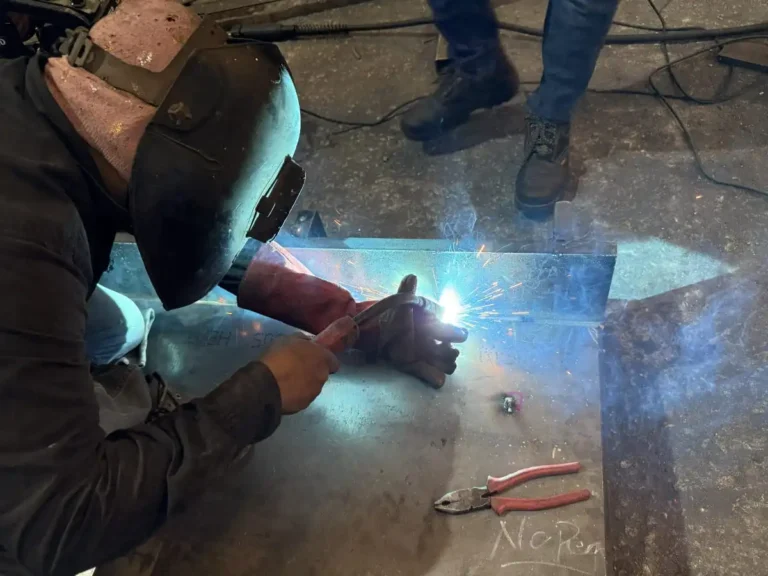
Who should join Fabrication welders, Railways and heavy fabrication companies, semi-automatic welding operators, and welders preparing to perform FCAW welding on large Structures.
Which Welding Process Should You Learn? SMAW vs TIG vs MIG vs FCAW
| Feature | SMAW (Arc/Stick) | GTAW (TIG) | GMAW (MIG/MAG) | FCAW |
|---|---|---|---|---|
| Skill level needed | Moderate | High | Low to moderate | Moderate |
| Weld quality / finish | Good; slag to remove | Excellent, clean | Good, minimal cleanup | Good; slag to remove |
| Speed / deposition | Moderate | Slow | Fast | Fast |
| Shielding | Flux coating | Inert gas (argon) | Inert (MIG) or active (MAG) gas | Flux core ± gas |
| Works outdoors / windy | Yes | Poor (gas shield is disturbed) | Poor with gas-shielded | Good with self-shielded wire |
| Typical materials | Carbon steel, low-alloy, stainless | Stainless steel, carbon steel, non-ferrous, thin sections | Carbon steel, stainless, aluminium | Carbon and low-alloy steel |
| Typical industries | Fabrication, structural, maintenance | Piping, pressure vessels, aerospace, food/pharma | Automotive, general fabrication, robotic cells | Structural, shipbuilding, heavy fabrication |
| Equipment cost | Low | Medium–high | Medium | Medium |
Simple rule: learn SMAW first if you want to work on site or in a general fabrication shop; add TIG if you want to weld pipes, stainless steel and pressure parts; choose MIG/MAG or FCAW if your employer runs high-production or structural work. Many industrial welders train in two or more processes.
How Our Welder Training Course Works?
- Tell us your requirement — process, material, thickness range, position and the job you are preparing for (WhatsApp, phone or visit).
- We design your programme — the trainer matches content and practical time to your background and your job profile.
- Classroom + practical training — process fundamentals, safety, joint design, welding symbols and defects, then extended practice on plate and pipe (60–80% practical).
- Weld inspection and feedback — your test welds are inspected visually and, where required, by radiography, ultrasonic, MPI or DPT in our NDT laboratory, so you get objective feedback.
- Qualification test (optional) — take a welder performance qualification test under an inspector, as per the code your employer needs.
- Certificate and next steps — receive your training completion certificate and, on passing, your welder qualification certificate. We can also help you plan further courses such as welding inspector certifications.
Who Can Join Our Welder Training Courses?
- Working welders who want to upgrade their skills or add a new process
- Fabrication and maintenance staff moving into welding roles
- Welding supervisors and foremen who need first-hand process knowledge
- Companies training a group of welders — at our centre or at your site
To get the most from a practical-intensive course, we recommend at least 3 months of on-the-job welding experience before you join. In special cases, freshers and ITI pass-outs are welcome in our foundation batch provided if they are passionate to learn welding from basics. Not sure whether you are ready? Ask our team and we will guide you. Download our course brochures.
Welder Training Course Fees & Duration
Course fees and duration depend on the welding process, the joint types and positions you need, the material, and whether you want a qualification test after training. Because each programme is customised, we share a fee quote after understanding your requirement. WhatsApp us your requirement and you will receive a quote and schedule.
Welder Qualification & Certification After Training
A training certificate shows you completed a course. A welder qualification certificate shows that you welded a test piece under an inspector’s supervision and that the weld passed the required inspection and tests as per a specific code. Employers, clients and third-party inspectors ask for the second one. At the end of training you can take a qualification test at our centre, with visual inspection, radiography or ultrasonic testing and mechanical tests as the code requires, and receive your certificate.
International Welding codes we qualify against
- ISO 9606-1 — Qualification testing of welders, fusion welding, steels
- ISO 9606-2, ISO 9606-3 — aluminium and copper (on request)
- ASME Section IX — welder performance qualification (WPQ)
- AWS D1.1 (steel), AWS D1.2 (aluminium), AWS D1.3 (sheet steel), AWS D17.1 (aerospace fusion welding)
- API 1104 — pipeline welding
- IBR requirements for boiler-related welding
Learn more about welder qualification tests in Bangalore — or ask us to qualify your existing welders without training.
Standards and Codes We Work To for WPS, PQR and Welder Qualification
- ASME Section IX — Welding, brazing and fusing qualifications (BPVC)
- AWS D1.1 — Structural Welding Code, Steel
- AWS D1.2 — Structural Welding Code, Aluminium
- AWS D1.3 — Structural Welding Code, Sheet Steel
- AWS D17.1 — Fusion welding for aerospace applications
- ISO 15609-1 — Specification of welding procedures — arc welding
- ISO 15614-1 — Welding procedure test — arc and gas welding of steels, and arc welding of nickel and nickel alloys
- ISO 9606-1 — Qualification testing of welders — fusion welding — steels
- ISO 3834 and EN 15085 — quality requirements for welding fabrication and railway vehicles (consulting available)
This is not a complete list. Send us your code, drawing or client specification and we will confirm what is required. Contact welding engineer on phone: +91 9844129439 | email: welding@trinityndt.com
Corporate and In-Plant Welder Training
If you run a fabrication shop, EPC site or manufacturing plant, we can train your welders at our Peenya centre or organise the programme at your venue — focused on your actual product, material, thickness range and welding positions. Companies use our programmes to reduce weld rejections and rework, prepare welders for customer audits and qualification tests, and build multi-process skills in their teams. We regularly support fabricators around Bangalore, Mysuru and the Hosur–Krishnagiri belt.
what corporate clients get:
- Skill assessment of your welders before training
- A programme designed around your WPS, drawings and consumables
- Practical training, followed by inspection of the test welds
- Welder qualification to ISO 9606-1, ASME IX or client codes
- Welding machine calibration and welder qualification record support
- Optional welding coordinator (IWE/IWT) and ISO 3834 / EN 15085 consulting
Other Welding Services at Trinity NDT
Welder Qualification Test
Qualify welders to ISO 9606-1, ASME IX, AWS D1.1 and more.
Welding Machine Calibration
NABL-lab calibration and on-site visits.
ISO 3834 & EN 15085 Consulting
Gap analysis, documentation and RWC/IWE support.
Welding Inspector Courses
CSWIP, AWS CWI and exam-preparatory courses.
NDT Services
Radiography, UT, MPI, DPT, PAUT, TOFD and more.
Brazing & Brazer Qualification
Procedure and personnel qualification.
Our Welding Centre in Peenya, Bangalore
The Trinity NDT Centre of Excellence in Welding is located in the heart of the Peenya Industrial Area, Bangalore, close to Yeshwanthpur, Jalahalli, Rajajinagar and the Tumakuru Road corridor. The centre houses Industry 4.0-ready Fronius welding machines, welding bays for plate and pipe, an in-house NABL-accredited NDT laboratory for testing your welds, and classrooms for theory sessions.
Address: Trinity NDT WeldSolutions Pvt. Ltd., 491, Site No. 12, 14th Cross, 4th Phase, Peenya Industrial Area, Bangalore – 560058, Karnataka, India
Phone / WhatsApp: +91 98441 29439 · Welding engineer: +91 91413 39969
Email: info@trinityndt.com · welding@trinityndt.com
Hours: 8am to 7pm (Monday to Saturday) & 8am to 2pm on Sundays. To book your training contact us.
Reviewed and led by industry-certified experts Ravi Kumar T, CEO & Co-Founder — ASNT NDT Level III in six methods, NAS 410 Level III, International Welding Engineer (IWE), ISO 9712 Level III in UT, MT, PT, RT, VT & ET, licensed Radiological Safety Officer. Trinity NDT has served more than 1,500 corporate clients since 2001 and received the ET Rise Top 10 MSME India 2021 award.
FAQ About Our Welder Training
The best welder training course is the one that matches your target process and job, and is delivered by qualified trainers, on modern machines, with weld inspection and code-based qualification. When comparing institutes, check: (1) is training mostly practical, (2) are welds actually inspected by NDT, (3) can you qualify to ISO 9606-1 or ASME IX afterward, (4) are trainers IWE, CSWIP or AWS certified, and (5) are the machines current. Trinity NDT’s Centre of Excellence in Welding in Peenya offers all five.
Trinity NDT offers welder training in four processes: SMAW (arc/stick), GTAW (TIG), GMAW (MIG/MAG/CO₂) and FCAW (flux-cored). Programmes cover plate and pipe, are customised to your job, and can be followed by a welder qualification test.
MIG welding feeds a continuous wire electrode automatically and is faster and easier to learn, while TIG welding uses a non-consumable tungsten electrode and a hand-fed filler rod, giving cleaner, more precise welds but requiring more skill and time. MIG suits production fabrication; TIG suits critical piping, stainless steel, thin sections and aerospace work.
GMAW (gas metal arc welding) is the umbrella term for MIG and MAG welding. It becomes MIG when an inert gas such as argon is used and MAG when an active gas such as CO₂ or an argon-CO₂ mixture is used. In India, CO₂-shielded GMAW on steel is often just called “CO₂ welding”.
SMAW (shielded metal arc welding), also called arc welding or stick welding, joins metals with an electric arc struck between a flux-coated electrode and the workpiece. The flux coating burns to produce a gas shield and slag that protect the weld, so no separate shielding gas is needed.
TIG welding is used where weld quality is critical — pressure vessels, boilers, process piping, stainless steel systems, aerospace parts and thin materials. It produces clean, high-quality welds and is widely used for root passes on pipes.
FCAW (flux-cored arc welding) uses a tubular wire filled with flux, while MIG uses a solid wire and always needs external shielding gas. Self-shielded flux-cored wires need no external gas, which makes FCAW well suited to outdoor and structural work.
SMAW (arc welding) is the best first process for most welders because it teaches arc control, joint preparation and defect awareness with low-cost equipment. Add TIG for pipe and stainless steel work, or MIG/MAG and FCAW for high-production and structural fabrication.
Duration depends on the process, the positions you need and your prior experience, so we tailor it for each candidate or batch. Most programs for welder training runs for about 2 – 8 weeks.
Fees depend on the process, duration, consumables and whether a qualification test is included. Share your requirement on WhatsApp (+91 9844129439) and we will send a quote. Our welder training strarts from Rs.20,000/-
We recommend at least 3 months of on-the-job welding experience so you can absorb the practical training quickly. In special cases, freshes and ITI pass outs can join foundation batch. Corporate groups can be trained irrespective of level, with the content matched to their skill.
You receive a training completion certificate after the course. A welder qualification certificate is different: it is issued only after you pass a test weld as per a code such as ISO 9606-1 or ASME Section IX, and it is the document employers and inspectors check. We can arrange the qualification test after training.
Under ISO 9606-1, a certificate is valid for three years, provided the employer confirms every six months that the welder has continued to weld within the qualified range. Under ASME Section IX, qualification stays effective as long as the welder uses the process at least once every six months. Always check the current edition of the code or your client’s requirement.
The 6G test is a pipe welding test in which the pipe is fixed at a 45° incline and cannot be rotated, so the welder must weld through flat, vertical and overhead positions in one joint. Passing 6G is a widely recognised proof of pipe-welding skill and typically qualifies the welder for all positions on pipe and plate, subject to the code’s rules.
A WPS is the approved welding procedure the welder follows, a PQR (or WPAR/WPQR) is the record of the qualifying test weld and its results, and a WPQ is the qualification record that proves an individual welder can produce sound welds to that WPS. Trinity NDT prepares all three and tests the welds in its NABL-accredited laboratory.
Yes. Trainee and qualification test welds can be inspected by visual testing, radiography (X-ray and gamma ray), ultrasonic testing, magnetic particle inspection and liquid penetrant inspection at Trinity NDT’s own laboratory, and by mechanical tests where the code requires them.
Yes. We can train groups at our Peenya centre or at your premises, with the content designed around your WPS, materials, thickness range and welding positions. We regularly serve clients in Bangalore, Mysuru and the Hosur area.
Yes. Welders trained elsewhere can take a qualification test at our centre, and companies can have their welders qualified at their own site by our inspectors. See our welder qualification test page for details.
The centre is at 491, Site No. 12, 14th Cross, 4th Phase, Peenya Industrial Area, Bangalore – 560058. You can reach us at +91 98441 29439 or info@trinityndt.com.
Yes — India’s expanding manufacturing, fabrication, energy and infrastructure sectors have created strong demand for skilled, certified welders, and demand is highest for welders who can qualify in TIG and pipe welding to international codes. Skill and certification, more than formal education, decide employability and growth.